BORNLI / product decisions
Design a calibration tracking app around the instrument history
A calibration calendar tells a supervisor when a gauge is due. It cannot tell them which lots relied on a gauge that came back outside tolerance. Start the app with instrument identity, results before and after adjustment, and a link to actual use.
What must follow the instrument out of the tool crib?
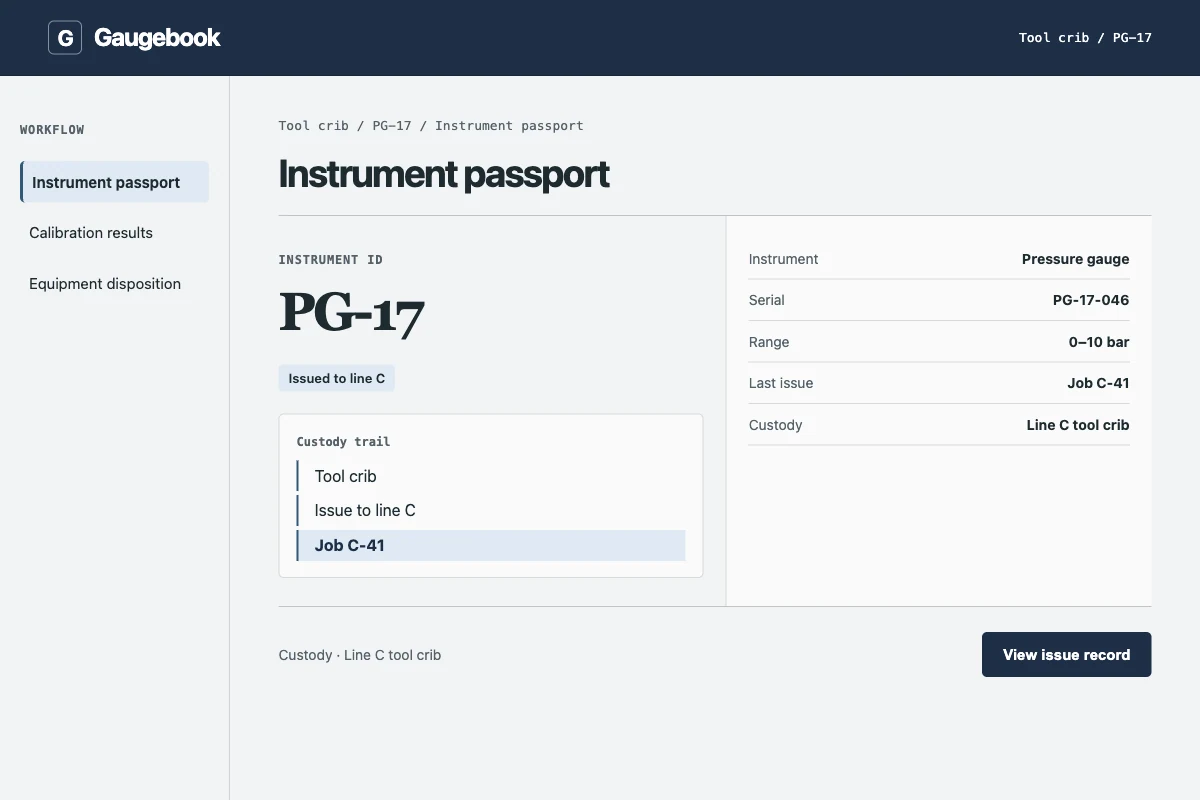
In this illustrative scenario, gauge PG-17 measures pressure on line C. The record ties the engraved ID to its serial, operating range, current certificate and last documented issue. A replacement with the same model number gets its own record. Scanning the bench label alone cannot establish which instrument a technician used.
When PG-17 leaves the crib, log the job and the time it returns. If a handover is missing, show a gap with an owner. Silently inventing a return time would give a later investigation a false boundary.
Why keep both calibration readings?
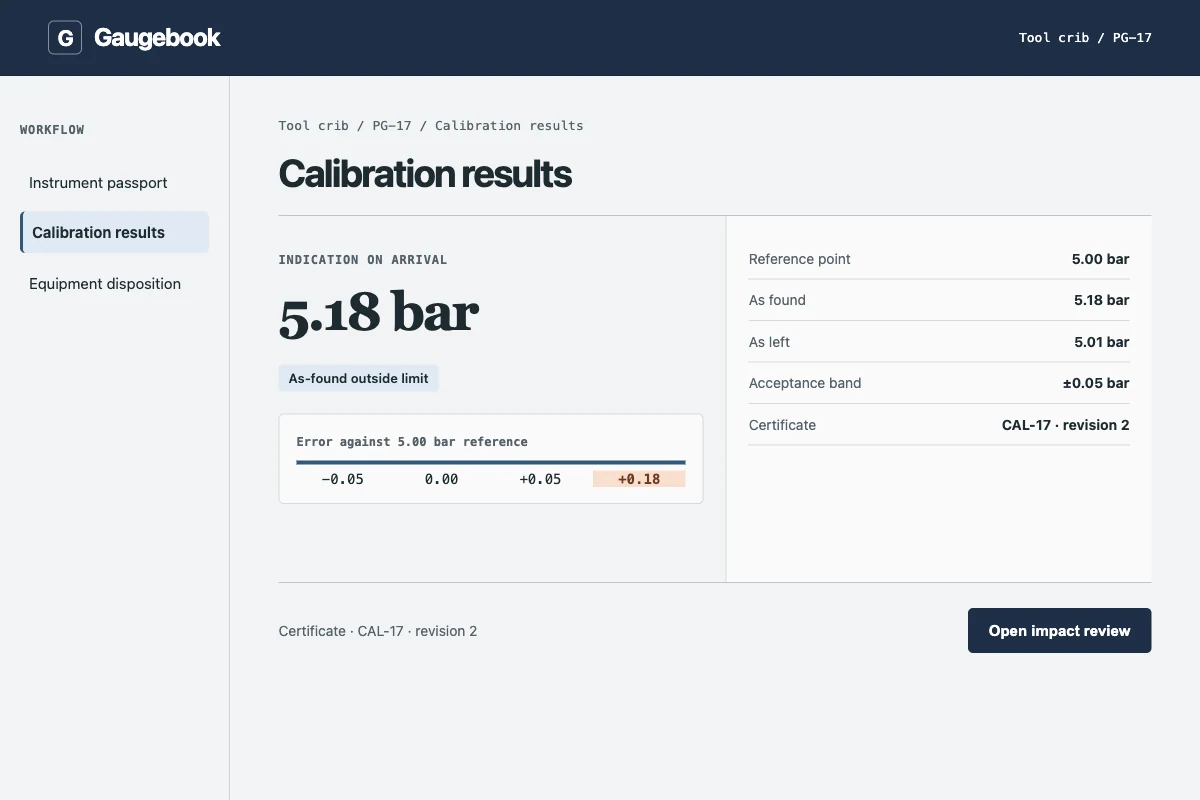
Beamex recommends retaining results before and after adjustment when an instrument needs adjustment. The first reading tells the quality team what condition arrived at the bench. The second describes the condition after the technician worked on it. Replacing the first result with the second removes the reason for opening an investigation.
Beamex · How often should instruments be calibrated?
At the 5.00 bar check point, PG-17 indicated 5.18 bar on arrival and 5.01 bar after adjustment. The example limit is ±0.05 bar. Keep both readings, the unit, the specified limit and the report revision. A passing second reading leaves the question of earlier work open.
How does a hold turn into a defensible release?
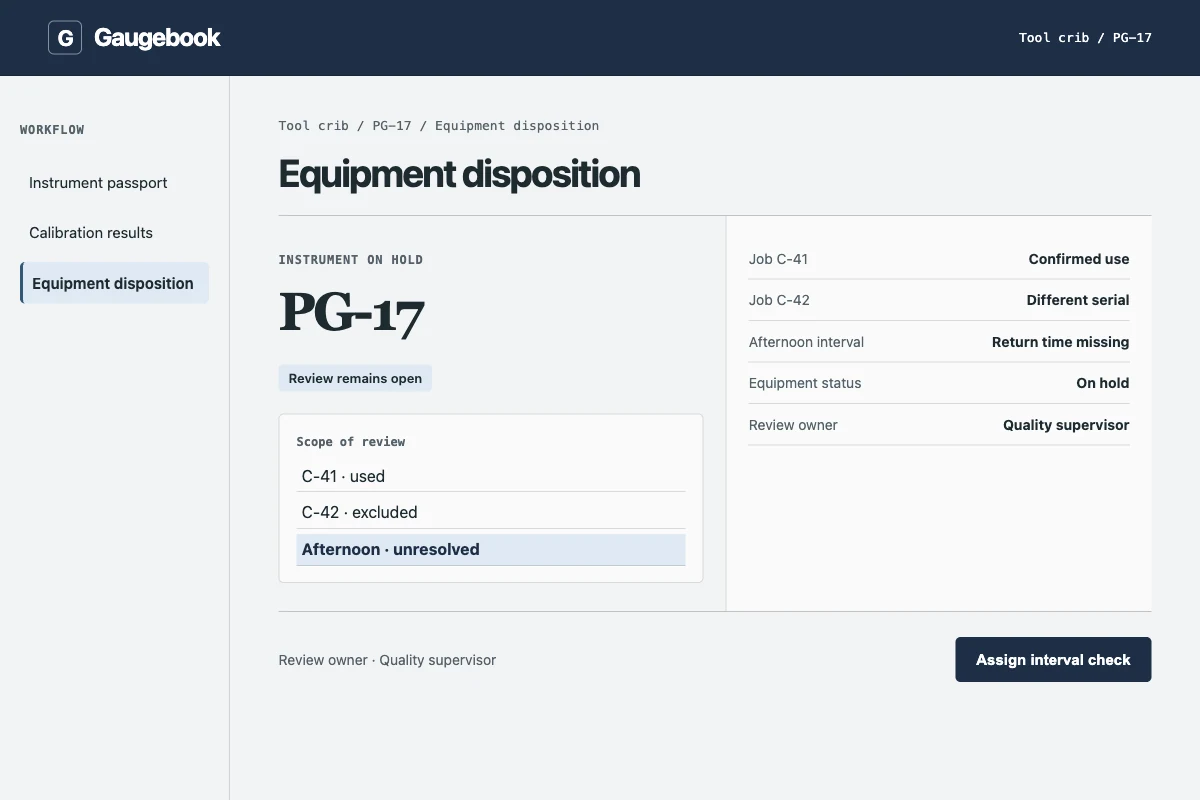
The supervisor places PG-17 on hold and reviews actual issue records since the last accepted check. Job C-41 used the gauge. Job C-42 used a different serial. An unlogged afternoon stays in the investigation until the team reconciles the bench records. A candidate job is a lead to investigate, not a finding of defective output.
Pilot one instrument family in one crib. Test a failed as-found result, an amended certificate and an issue record without a return. A supervisor should see the original readings, retain an owner for the historical review and record the authorized equipment disposition separately.
Map the workflow before building it.
Tell us what your team handles manually, which tools you use, and where the process gets stuck. Start by email.
Discuss your workflow ↗