BORNLI / product decisions
Turn a utility bill into a traceable meter-period record
An accounts payable total cannot tell a facilities manager how much electricity a meter used. Extract the service dates, meter ID, quantity and unit together. Preserve the statement line and make a reviewer decide what a correction replaces.
Which statement belongs to which site?
Flexa Cloud describes Indra Energia developing a bill-analysis platform with Amazon Bedrock for Brazil’s free energy market. The vendor account documents the application and its purpose. Flexa gives no measurement period or verified outcome for the US facilities workflow below. EnergyCAP separately describes UniFirst linking scanned bills to individual database entries after investing in its system in spring 2007. That account documents bill management without establishing use of generative AI.
Flexa Cloud · Indra Energia · EnergyCAP · UniFirst
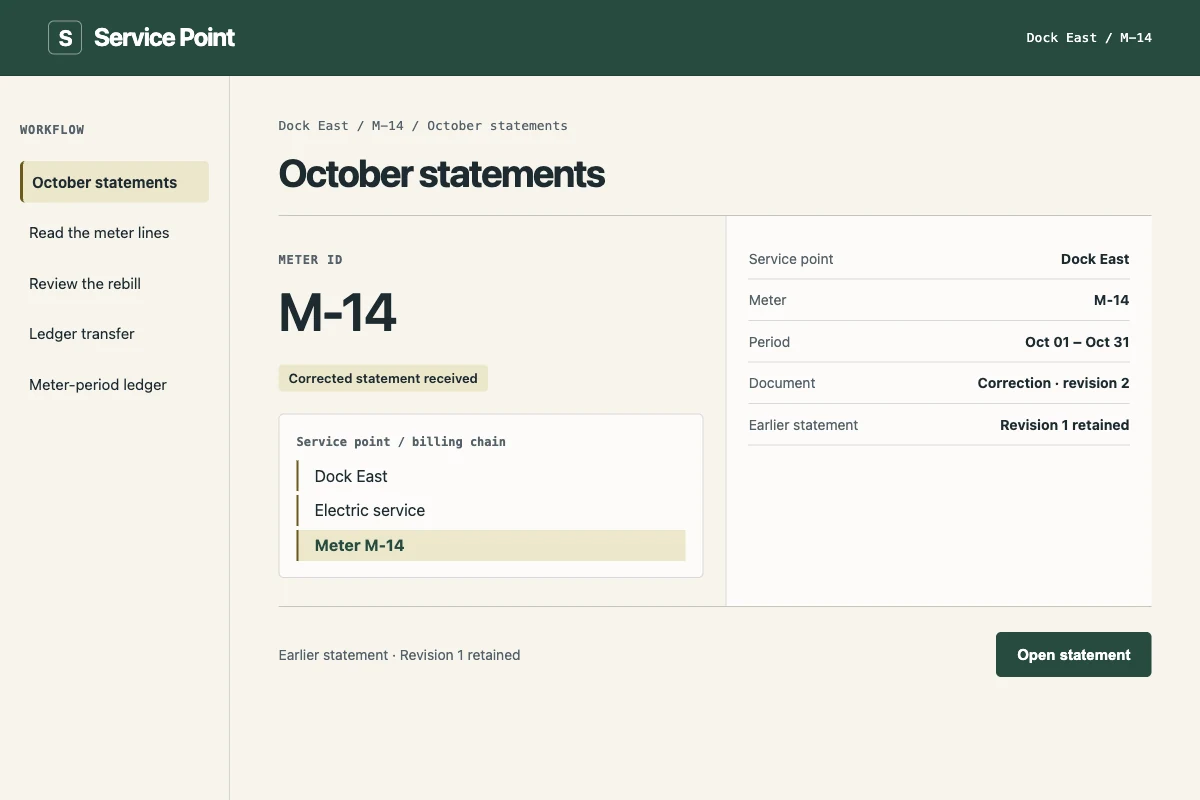
Our illustrative scenario follows a US facilities team. A corrected statement for Dock East lists meter M-14 and service from October 1 through October 31. Keep the earlier statement attached. The meter, service point and billing account must agree before a file enters the site ledger.
Which numbers actually measure electricity?
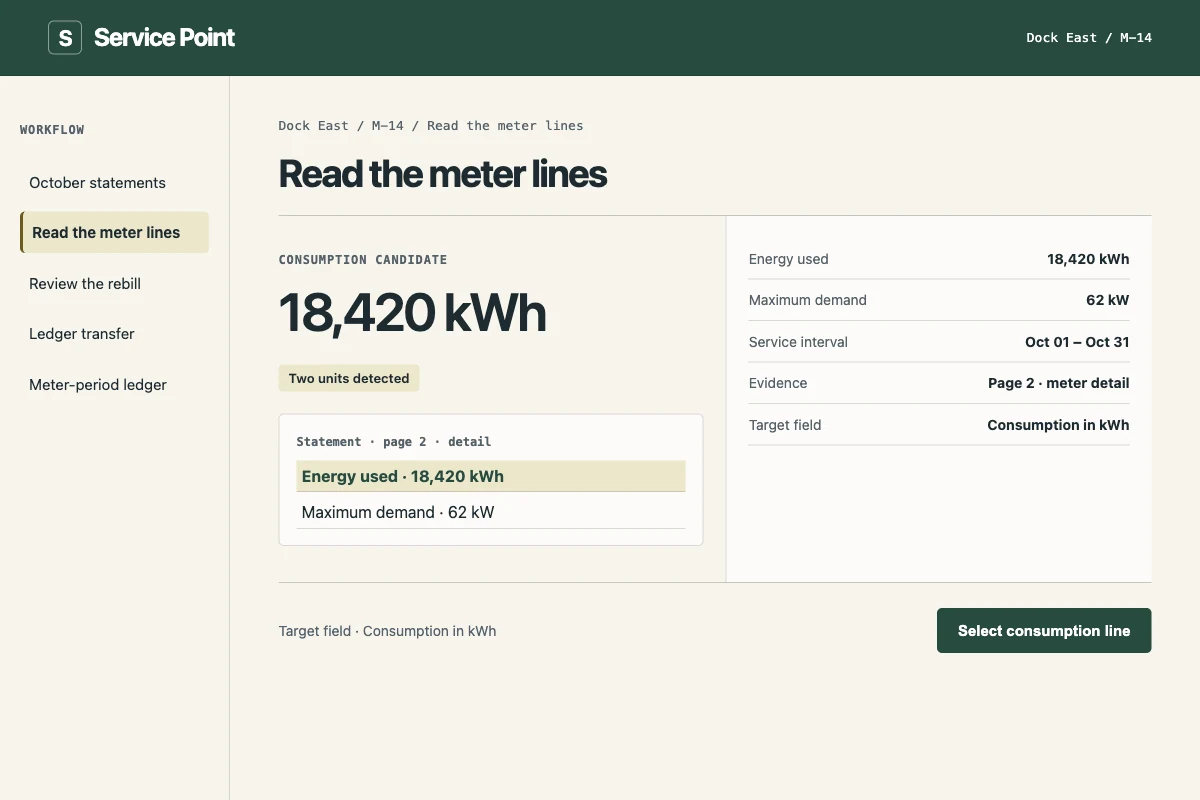
Read each candidate with its original label, unit, page and service interval. The sample statement lists 18,420 kWh of consumption and 62 kW of maximum demand. These are different quantities. A dollar subtotal or a higher demand number cannot fill a missing consumption line.
The extractor highlights both lines and copies only the consumption quantity to the energy field. When the statement has two meters and no allocation, keep an unresolved site-level record. Guessing a split would corrupt comparisons between buildings.
What should a reviewer do with a rebill?
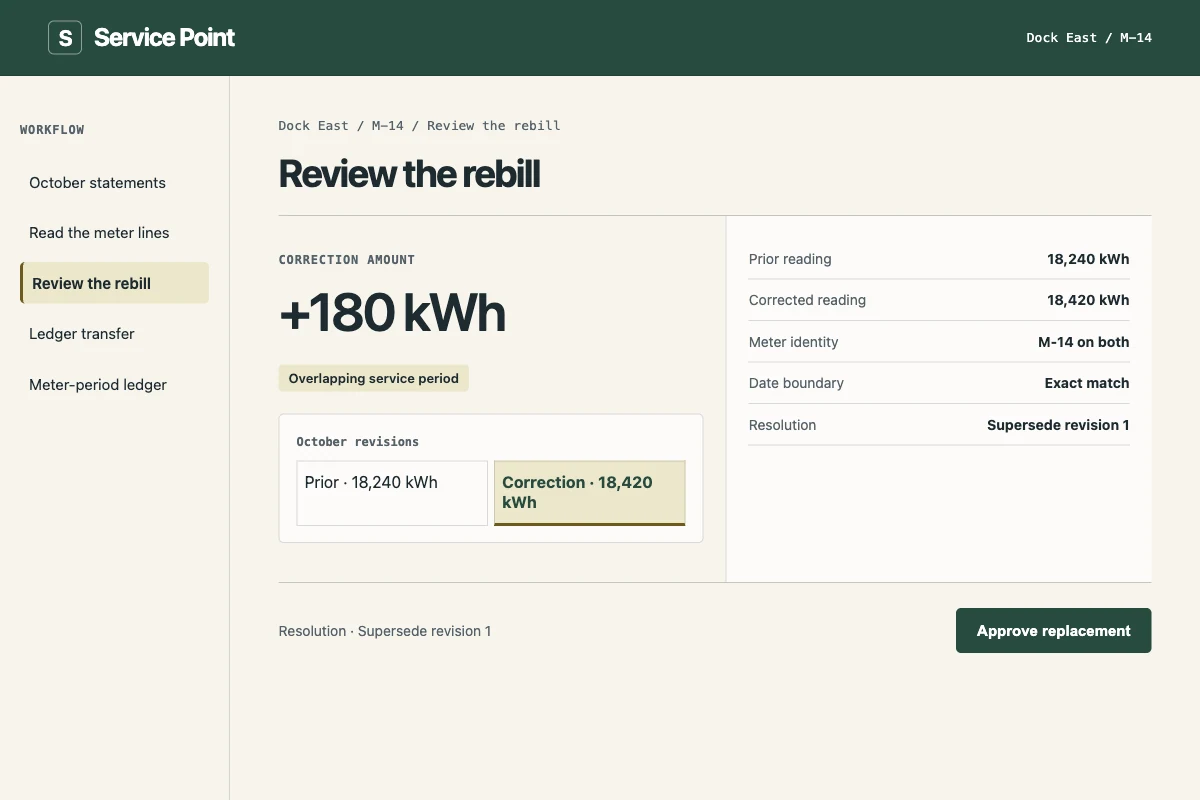
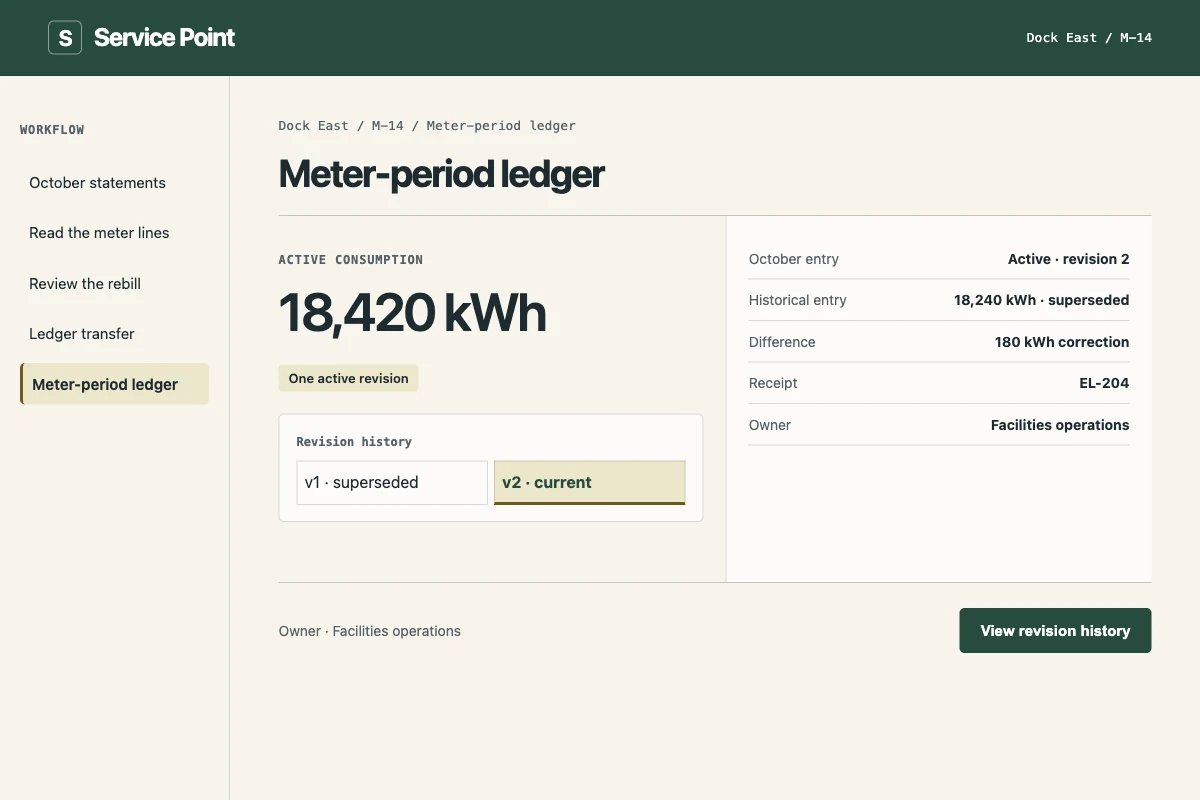
The first statement for M-14 recorded 18,240 kWh for the same dates. A second file says corrected statement and shows 18,420 kWh. Adding both double counts the month. The reviewer compares the correction notice, meter and exact service dates, then marks the earlier entry superseded.
A partial overlap gets a different route. Leave both records pending and ask the supplier for the boundaries or interval detail. No automatic prorating enters the ledger unless the customer defines and approves that policy.
How does a correction reach the energy ledger?
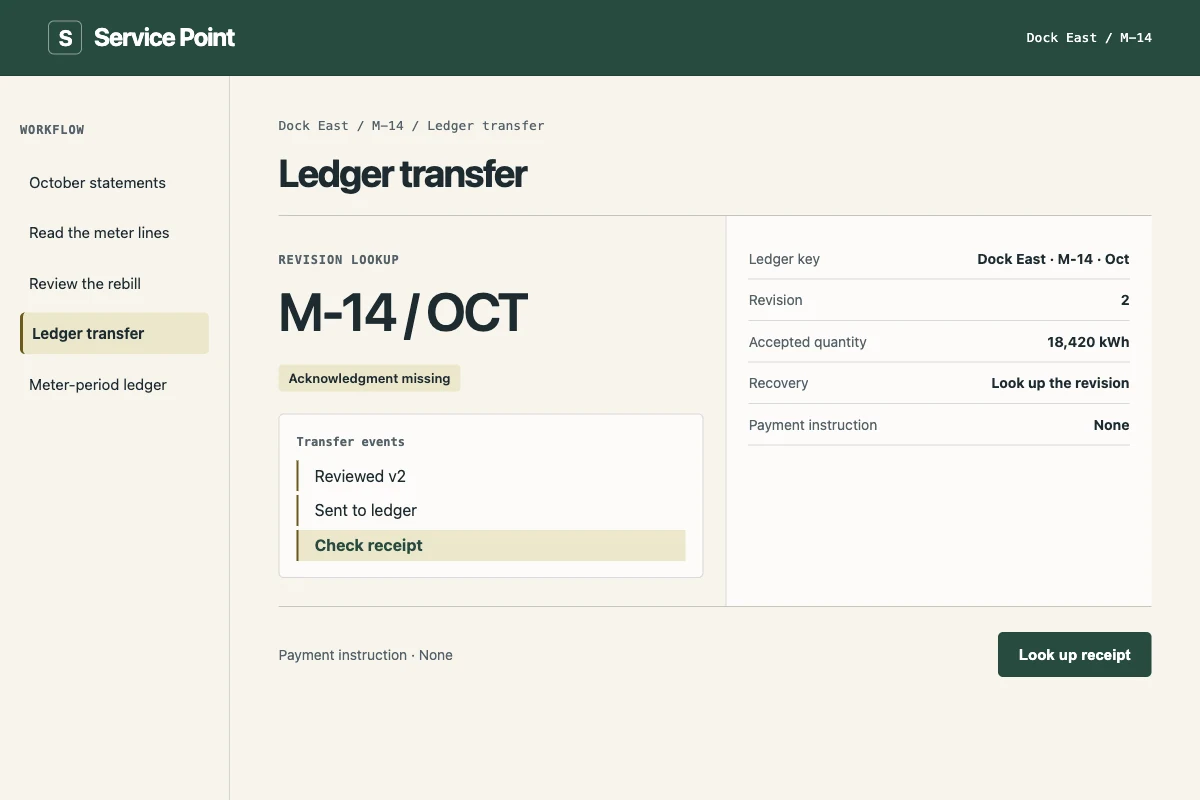
Send the approved revision and the identity of the entry it replaces. Keep the supplier statement number and the meter-period key together. A connection failure after the write triggers a lookup by that revision before any retry. A matching receipt closes the transfer. A different quantity returns it to reconciliation.
The pilot writes to an energy ledger only. A meter correction must not trigger payment, reverse an accounts payable posting or silently change a building benchmark. Those are separate decisions with different owners.
What is an observable result of the pilot?
The October total for M-14 now references one active entry of 18,420 kWh. The older 18,240 kWh remains visible in history. The 180 kWh difference is a correction in this concept demo. It is not measured energy savings.
Start with one electric supplier and one class of commercial meter. Include rebills, overlapping intervals, mixed units and lost acknowledgments in a held-out set. Compare active meter-period totals with a manually reconciled ledger. Measure unexplained gaps and reviewer minutes alongside field accuracy.
Map the workflow before building it.
Tell us what your team handles manually, which tools you use, and where the process gets stuck. Start by email.
Discuss your workflow ↗